Prefab Metal Garages vs Wooden Garages: Which Is Better, Cost-Effective & Lasts Longer? (2026 Guide)
February 16, 2026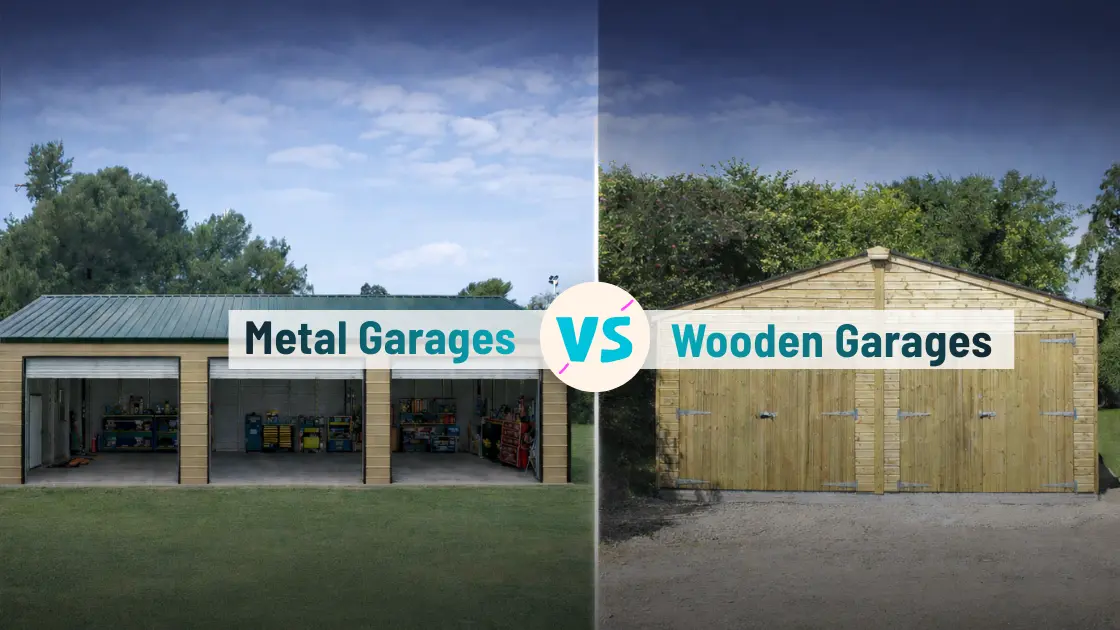
Prefab metal garages are better than wooden garages for most homeowners. They cost $4,000–$25,000 compared to $10,000–$35,000+ for wood, last 20–40 years vs 15–25 years for wood, and require significantly less maintenance. Metal garages resist pests, rot, fire, and extreme weather. Wood garages offer a traditional aesthetic but come with higher upkeep costs.
Choosing between a prefab metal garage and a wooden garage comes down to three factors: cost, durability, and maintenance. In almost every category, prefab metal garages outperform wooden garages—they cost less upfront, last longer, and need minimal upkeep over the decades. This guide breaks down exact pricing, real lifespan data, and a complete side-by-side comparison so you can make the right choice for your home and budget.
What Is a Prefab Metal Garage and How Is It Built?
A prefab metal garage is a pre-engineered steel structure manufactured in parts at a factory and then assembled on your property. These buildings use galvanized steel frames and panels that resist rust and corrosion, designed to meet local wind and snow load requirements across the United States.
Most modern prefab steel garages are built with:
- 14-gauge or 12-gauge certified steel frames (heavier gauge = stronger)
- 29-gauge or 26-gauge steel roof and wall panels
- Galvanized coating to prevent rust and corrosion
- Anchoring systems for concrete slab or ground installation
One of the biggest advantages is speed. Most prefab steel garages are fully assembled in just 1–3 days once the foundation is ready. They also offer extensive customization options, including size, roof style, doors, windows, insulation, color, and whether walls are fully or partially enclosed.
Example pricing for prefab metal garages:
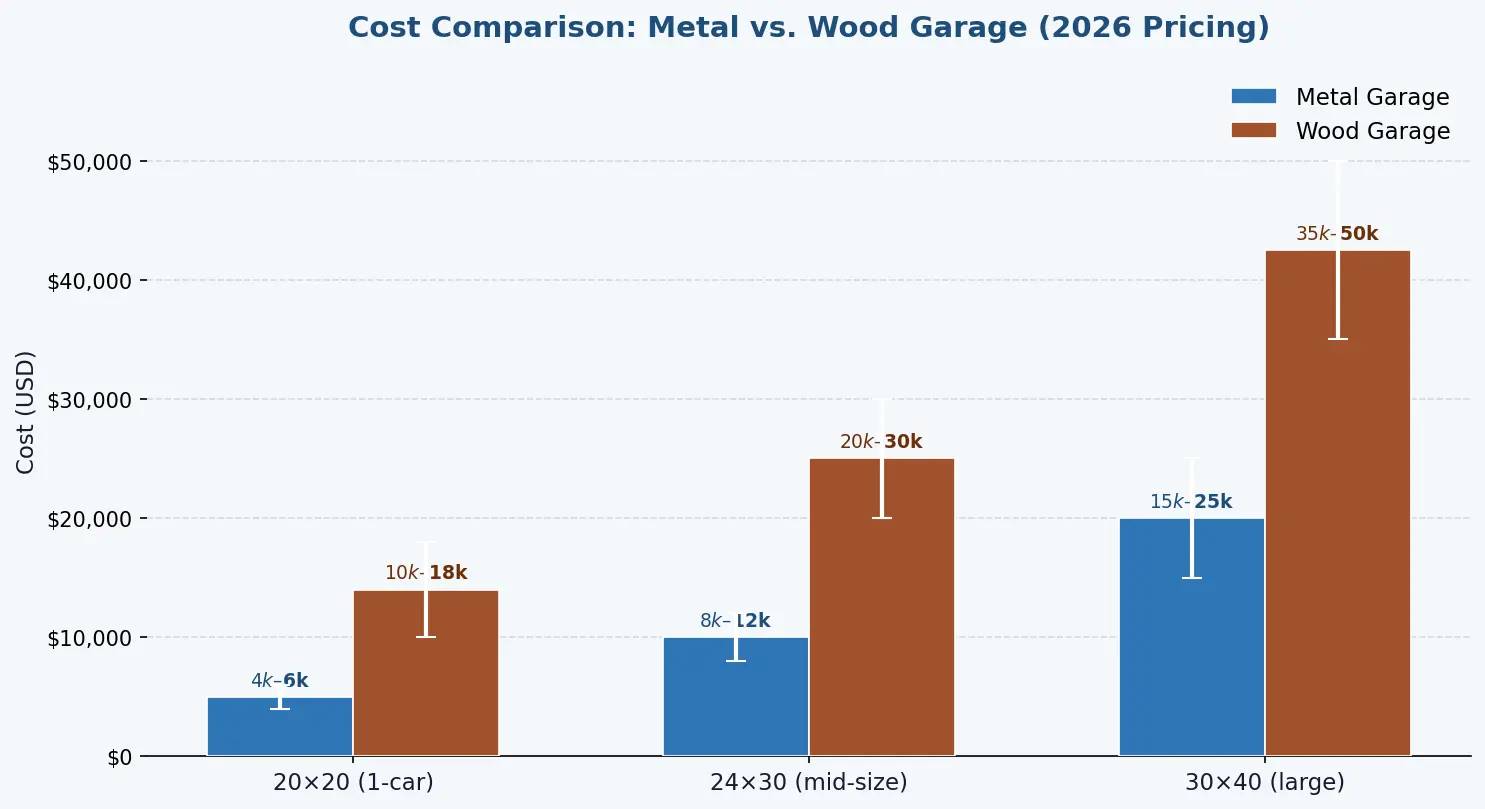
- Basic one-car garage (20×20): starting around $4,000–$6,000
- Mid-size enclosed garage (24×30): $8,000–$12,000
- Large fully enclosed insulated garage (30×40): $15,000–$25,000
What Is a Wooden Garage and How Is It Different?
A wooden garage is a site-built structure using lumber framing, plywood sheathing, and exterior siding such as wood panels, shingles, or vinyl. Unlike prefab metal garages, wood garages are typically constructed piece by piece on-site by a contractor, which significantly increases both build time and labor cost.
Wooden garages offer a traditional aesthetic and blend naturally with classic home styles, but they come with trade-offs: vulnerability to moisture, termites, rot, and fire are the four most common long-term problems that homeowners face.
Prefab Metal Garage vs Wooden Garage: Complete Side-by-Side Comparison
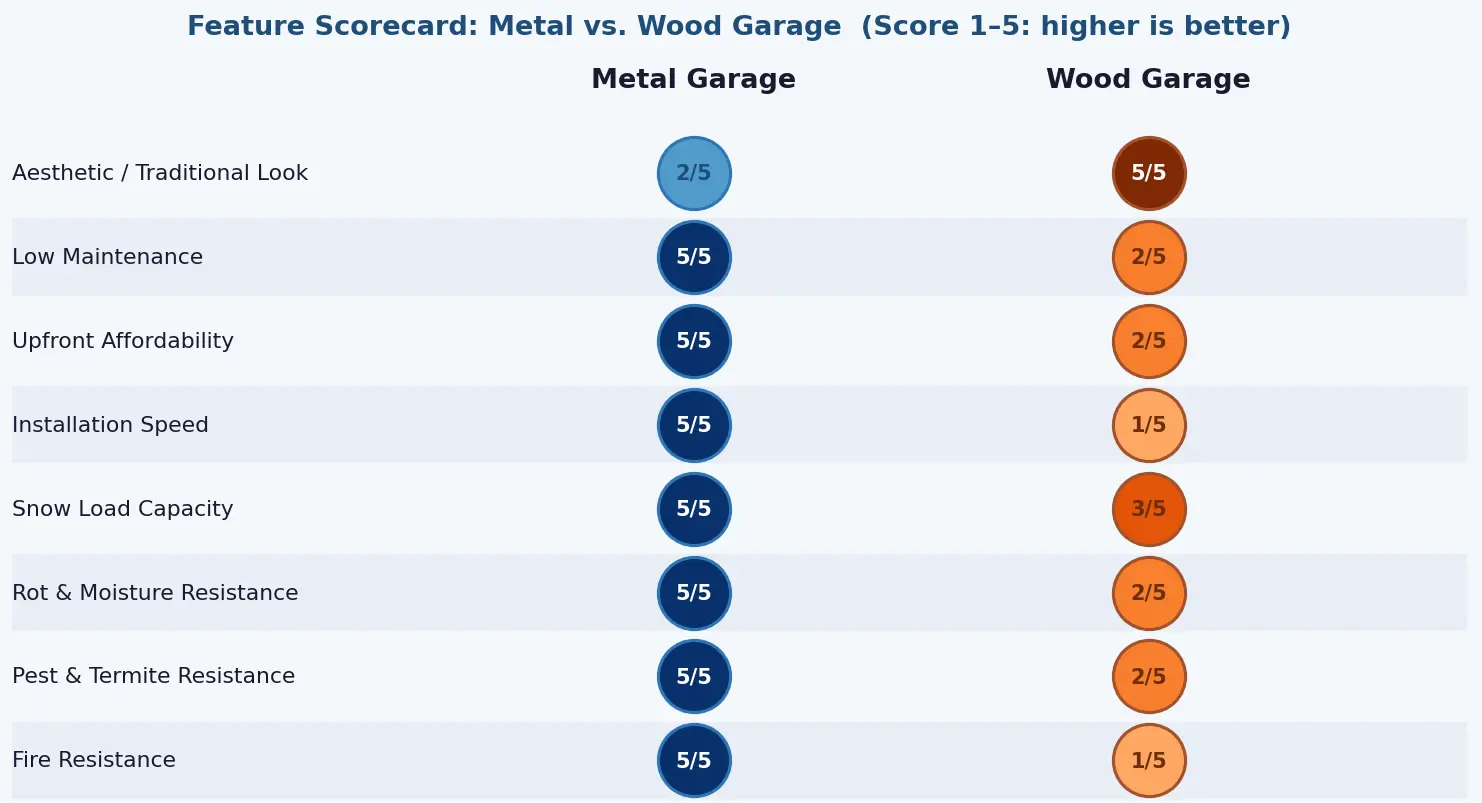
Here is a full feature and price comparison to help you decide which structure is right for your property.
| Feature | Prefab Metal Garage | Wooden Garage |
|---|---|---|
| Starting Cost (20×20) | $4,000–$6,000 | $10,000–$18,000 |
| Large Build Cost (30×40) | $15,000–$25,000 | $35,000+ |
| Installation Time | 1–3 days | 3–6 weeks |
| Lifespan | 20–40+ years | 15–25 years |
| Fire Resistant | Yes | No |
| Pest & Termite Resistant | Yes | Vulnerable |
| Rot & Moisture Resistant | Yes | Can warp/rot |
| Snow Load Capacity | High | Moderate |
| Customization Options | High | High |
| Best For | Long-term value & durability | Traditional aesthetics |
How Much Does a Metal Garage Cost Compared to a Wooden Garage?
Cost is often the deciding factor for homeowners, but the comparison goes beyond the initial price tag. You need to consider upfront cost, installation, long-term maintenance, and lifespan to get the true picture.
| Prefab Metal Garage Prices | Wooden Garage Prices |
|---|---|
| 20×20 basic steel $4,000–$6,000 | 20×20 wood garage $10,000–$18,000 |
| 24×30 vertical roof $8,000–$12,000 | 24×30 wood garage $20,000–$30,000 |
| 30×40 fully enclosed $15,000–$25,000 | Custom architectural $35,000+ |
When you factor in maintenance over 15 years, a wood garage can easily cost $7,500–$30,000 more in upkeep than a metal garage—on top of the higher initial price. For most homeowners, the math strongly favors steel.
How Long Does a Metal Garage Last vs. a Wooden Garage?
Metal Garage Lifespan
A properly installed prefab metal garage lasts 20 to 40 years with minimal effort. Some commercial-grade steel garages built with 12-gauge framing and vertical roof systems have remained structurally sound for over 40 years. Steel is a non-organic material, which means it does not break down the way wood does when exposed to moisture, insects, or temperature changes.
Steel garages resist:
- Termites: insects that cannot eat or damage metal
- Rot: no risk of wood decay from water exposure
- Warping: does not bend or twist from humidity shifts
- Mold: mold cannot grow on galvanized steel surfaces
- Fire: steel does not ignite or contribute to fire spread
Wooden Garage Lifespan
A wooden garage typically lasts 15 to 25 years, though this depends heavily on climate, lumber quality, and how consistently it is maintained. In humid, rainy, or pest-heavy regions, the lifespan can be considerably shorter without aggressive upkeep.
Wood is a natural, organic material that reacts to its environment. High humidity causes swelling and rot. Moisture from rain and snow weakens untreated wood joints over time. Termites and carpenter ants can silently damage structural framing without visible symptoms until repairs become expensive.
Which Garage Needs More Maintenance—Metal or Wood?
Maintenance is where the long-term cost difference becomes most visible. Many buyers underestimate how much time and money wooden garage upkeep requires over a 10–15 year period.
Metal Garage Maintenance Requirements
- Occasional cleaning (rinse with water 1–2 times per year)
- Annual check of bolts, anchors, and fasteners
- Inspect for any scratches that could expose steel to moisture
- Repainting may be needed after 10–15 years in harsh climates
Wood Garage Maintenance Requirements
- Repainting or restaining every 3–5 years
- Annual pest control treatments (termites, carpenter ants)
- Roof shingle replacement every 15–20 years
- Sealing cracks and joints annually to prevent moisture intrusion
- Repairing warped or rotted panels as they occur
Over 15 years, wood garage maintenance can add $7,500–$30,000 in additional costs depending on your climate and how diligent you are with upkeep. Metal garages by comparison typically cost under $500 in total maintenance over the same period.
Pros and Cons of Prefab Metal Garages vs Wooden Garages
Pros and Cons of Prefab Metal Garages
| Pros | Cons |
|---|---|
| Lower upfront cost (40–60% lower than wood) | Industrial appearance (not traditional wood look) |
| Fast installation—typically 1–3 days | May require insulation for temperature control |
| Exceptional durability—lasts 20–40+ years | Can be noisier in heavy rain without insulation |
| Virtually zero maintenance requirements | Limited architectural detailing vs custom wood builds |
| Fire-, pest-, rot-, and weather-resistant | |
| Handles heavy snow loads and high winds | |
| Wide range of sizes and customization options | |
| Rising steel demand makes resale value strong |
Pros and Cons of Wooden Garages
| Pros | Cons |
|---|---|
| Traditional, rustic, classic appearance | Higher upfront cost (40–60% more than metal) |
| Easier to match existing home exterior style | Shorter lifespan (15–25 years vs 40+ for steel) |
| Natural insulation properties of lumber | Vulnerable to termites, rot, mold, and moisture |
| High architectural customization potential | High ongoing maintenance costs ($500–$2,000+/year) |
| Fire risk—wood burns and spreads flame | |
| Construction takes 3–6 weeks vs 1–3 days for steel | |
| Rising lumber prices increase cost further |
Is a Metal Garage or Wooden Garage Better for Homeowners?
The right garage depends on your budget, goals, and design preferences. Here’s a simple breakdown to help you decide.
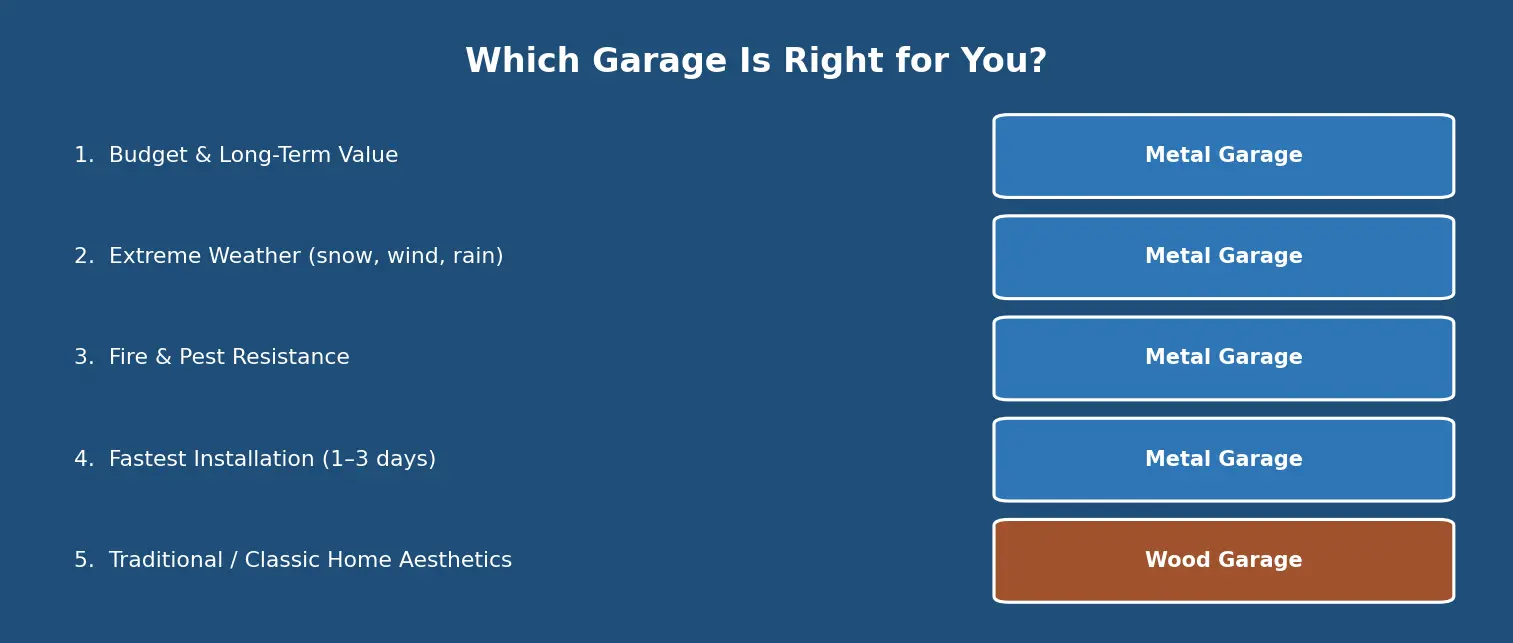
Best for Budget & Value: Metal garage wins. Lower upfront cost, lower maintenance, and longer lifespan = best return on investment.
Best for Extreme Weather: Metal garage wins. Engineered for snow loads, high winds, rain, and fire. No warping or rot.
Best for Traditional Looks: Wood garages win—if aesthetics are your priority and you’re ready for higher maintenance costs.
For the majority of US homeowners—especially those in humid, snowy, or pest-prone regions—a prefab metal garage delivers significantly more long-term value. The combination of lower cost, durability, and near-zero maintenance makes it the smarter investment in most scenarios.
Why Are More US Homeowners Choosing Prefab Metal Garages in 2026?
The shift toward prefab steel garages is accelerating across the United States for several concrete reasons:
- Lumber prices remain elevated- wood construction costs have risen significantly, while steel pricing has stabilized.
- Extreme weather is increasing- steel handles flooding, heavy snow, and high winds far better than wood.
- Faster builds- a 1–3 day installation vs. 3–6 weeks of on-site construction saves significant labor costs.
- Insurance benefits- many insurers offer lower premiums for fire-resistant steel structures.
- More customization than ever- modern steel garages now offer residential-style rooflines, color choices, and window options that rival wood aesthetics.
Final Verdict: Metal vs Wood Garage
For most homeowners in the United States, a prefab metal garage is the clear winner. Here’s why in plain terms:
- Metal costs 40–60% less upfront than a comparable wooden structure
- Metal lasts up to twice as long—20–40 years vs 15–25 years for wood
- Metal saves $7,500–$30,000+ in maintenance costs over 15 years
- Metal resists fire, pests, rot, and severe weather—wood does not
- Metal installs in days—wood construction takes weeks
The only reason to choose wood is if you strongly prefer a traditional aesthetic and are prepared to invest in consistent maintenance. For durability, value, and peace of mind, steel is the superior choice.
Frequently Asked Questions
Q. Are metal garages cost-effective than wooden garages?
Ans. Yes. A prefab metal garage typically costs $4,000–$25,000, while a comparable wooden garage costs $10,000–$35,000+, making metal garages 40–60% more competitive in most cases.
Q. How long does a prefab metal garage last?
Ans. A prefab metal garage lasts 20 to 40 years with minimal maintenance. Some commercial-grade steel garages with 12-gauge framing have remained structurally sound for 40+ years.
Q. Is a metal garage better than a wooden garage?
Ans. For most homeowners, yes. Metal garages are more durable, pest-resistant, and fire-resistant and easy to maintain than wooden garages. Wood garages offer better aesthetics but require more upkeep and cost more upfront and over time.
Q. Which garage needs more maintenance—metal or wood?
Ans. Wooden garages require significantly more maintenance, including regular painting, pest control treatments, and roof shingle replacement. Metal garages only need occasional cleaning and annual bolt checks, saving thousands of dollars over 10–15 years.
Q. Can a metal garage withstand extreme weather?
Ans. Yes. Steel garages are engineered to handle high wind loads, heavy snowfall, and rain. They do not warp, rot, or crack under temperature changes, making them ideal for all US climate zones, including coastal, snowy, and high-humidity regions.
Q. What size prefab metal garage do I need for two cars?
Ans. A 20×20 or 24×24 metal garage comfortably fits two standard vehicles. If you need extra storage or workspace, a 24×30 or 24×36 is recommended. Viking Metal Garages offers custom sizing to fit your exact property dimensions.